

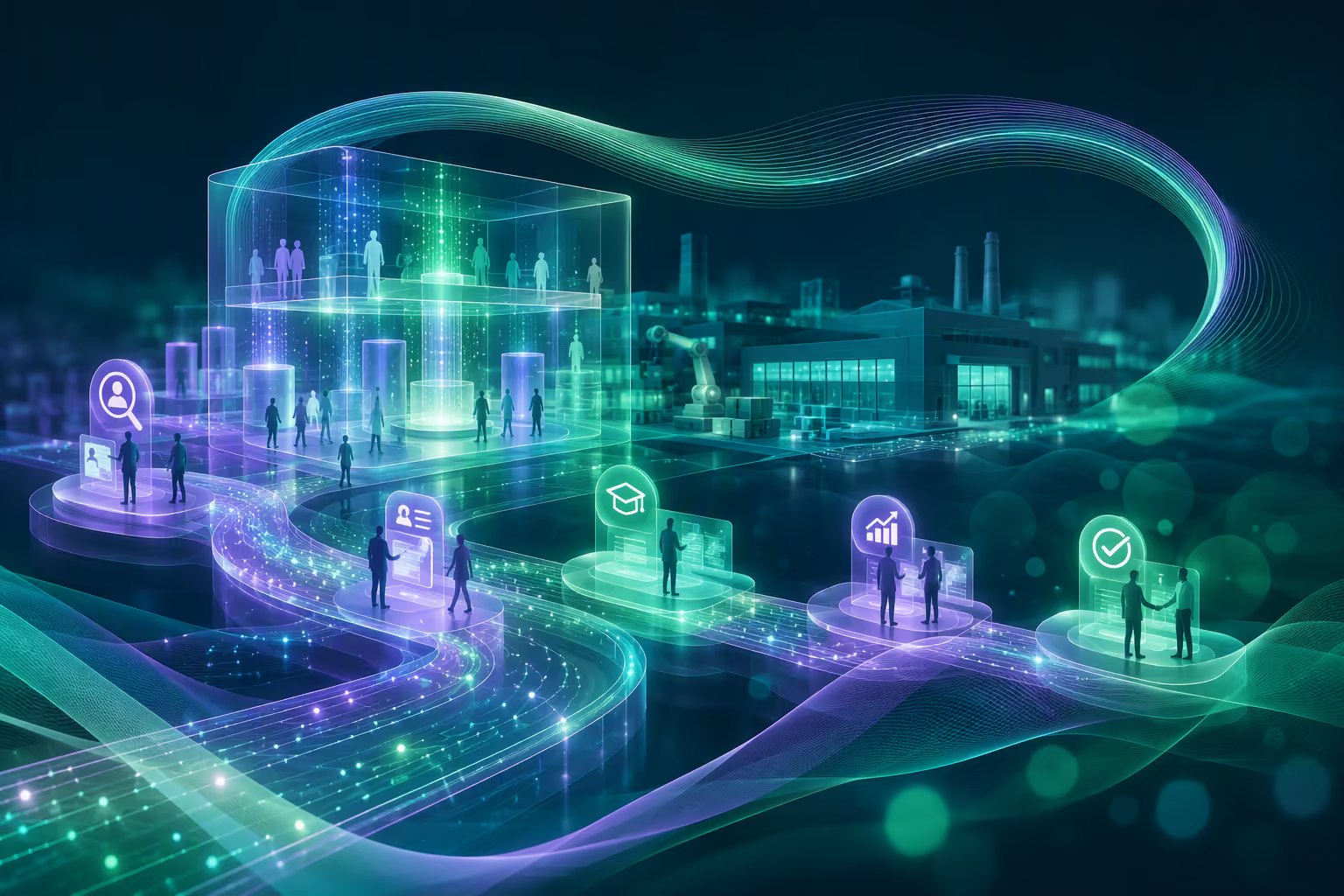
Every company knows it: things no longer work without digital tools, including, or especially, in people management. But how is such a step towards digitalisation actually implemented in a mid sized business? One of our clients, a mid sized mechanical engineering company with its own production and around 150 employees, decided to take the step forward with us and digitalise its HR processes.
The particular challenge was that at the start of the project a great deal of data and information was still on paper and only a little in Word or Excel. The company's resources for this project were also very limited. Despite the hurdles, the software was implemented successfully and the entire company benefits greatly from it. Many processes have run automatically since the system was introduced, which has freed up valuable staff and financial capacity. Managers, HR staff and employees benefit from more transparency and 24/7 access to the data they need for their work.
Creating a well functioning basis: the needs analysis
At the start of the project we carried out an analysis in order to work out what the company needed from such a tool. Various points were discussed and clarified, with the company's processes and the different roles in the foreground. Which processes does the company have? Which should be taken over digitally? Which have to be adapted or set up anew? Directly bound up with this were the access rights of the individual roles and the scope of the information. And of course how stakeholders would be integrated into the transformation process was a topic as well.
The requirements for the future HR management tool were derived from this needs analysis. The central point was that the company's processes should be mapped as far as possible with only a few compromises. Budgets for the software and for the implementation effort were also estimated and included in the requirements. In this phase we already sketched the future data flow in order to show how it would work together with software already in place in the company.
Once all the important questions, wishes and requirements had been clarified, it was time to select the right tool. To that end we compared and assessed various providers with the client. The decision in favour of the preferred provider was agreed with the works council. A roadmap was developed for introducing the software. The project plan and timing were communicated to the workforce early, in order to involve them in the change processes from the start.
Transparency and structure on the path to digitalisation
Responsibility for implementation was handed to a project team. It first tackled the most important basis of digitalisation, the data. All data, such as employee master data, was collected and prepared, and where necessary reworked. The data was standardised according to clear rules: employee designations, recording of career paths, qualifications and competences and so on. The existing or older data was archived in accordance with GDPR rules. Required documents were digitalised and standardised. Because there are interfaces to other software in the company, the data flow was defined in detail. For the implementation and rollout, all employees were informed about the important changes and steps and trained in using the software.
After some time had passed, the results were evaluated and it was assessed in retrospect whether all expectations had been met and the goals reached.
Looking back and looking ahead: a high level of transparency and efficiency
Our conclusion: digitalisation made it possible to reach the efficiency goals and to improve the HR area considerably. In this project we at THE MAK'ED TEAM were able to apply our many years of experience and professional expertise in such a way that the mid sized company did not only achieve a temporary success but gained lasting added value.
To support the introduction of a people management tool in your own company you can use our checklist.
You can find more about digitalisation in HR here.






.avif)