Process analysis & optimisation

Efficient processes are the foundation for transparency, quality and sustainable growth.

Hand deutet mit einem Stift auf Kursverläufe auf mehreren Monitoren

Efficiency does not happen by chance.

Efficient processes are the result of clear structures, defined responsibilities and a consistent focus on value creation. A systematic process analysis and optimisation creates transparency about workflows, reduces friction and lays the foundation for lasting efficiency gains, digitalisation and growth.

Growth, new sites, additional systems or changed responsibilities often increase complexity in a company. Decisions take longer, information gets lost at interfaces, and processes keep evolving over the years without fully meeting current demands any more.

A structured process analysis makes these connections visible and shows where bottlenecks, friction and unused potential lie along the value chain.

On that basis we develop processes further in a targeted way and create clear responsibilities, efficient and scalable workflows and transparent decision paths. Well structured processes are the foundation for digitalisation, automation and sustainable growth. The result is an organisation that implements change faster, uses resources more deliberately and stays capable over the long term.
Would you like to optimise your processes?

Arrange an appointment
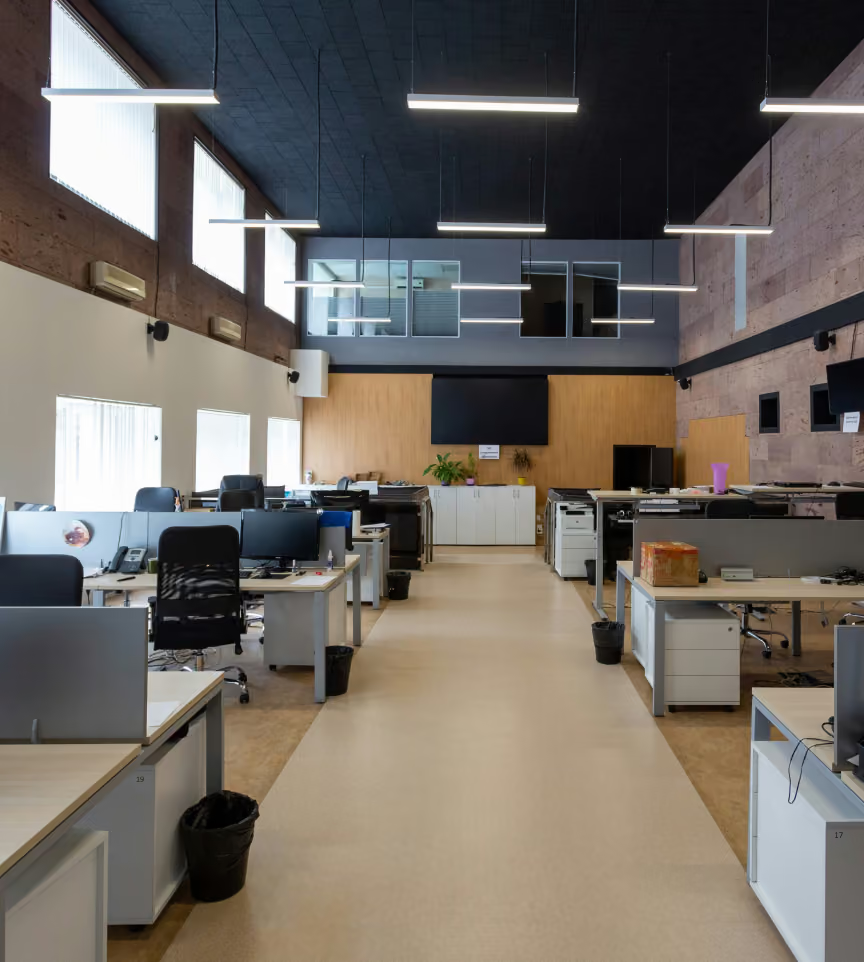
Großraumbüro mit Schreibtischreihen, Monitoren und Bürostühlen
Making organisation and processes fit for the future

How we approach process analysis and optimisation

Analysing the process landscape

We create transparency about existing workflows, responsibilities and interfaces along the entire value chain. This builds a shared understanding of how processes actually work today, where friction arises and where action is needed.

Identifying potential for improvement

We analyse processes systematically for bottlenecks, media breaks, duplicated work and unnecessary complexity. This shows where workflows can be simplified, resources used more deliberately and collaboration improved for the long term.

Process design, standardisation and optimisation

We develop processes so that workflows mesh smoothly and responsibilities are clearly settled. Together we design target processes fit for the future, define workable standards and create transparency about roles, responsibilities, interfaces and decision paths. The result is process reliability, efficient workflows without friction, a consistent way of working and lasting improvements in the company.

Digitalising and automating processes

We identify digital and automated solutions where they create concrete value in everyday work. This reduces manual effort, shortens lead times and creates the conditions for a capable organisation that is ready for the future.

Key figures and process control

We develop key figures and steering instruments that make processes measurable and show progress clearly. This creates a solid basis for decisions and a clear foundation for developing processes and organisation in a targeted way.

Implementation support and change management

We support the roll out of new processes and make sure the changes land in everyday work. Together with managers and employees we create the conditions for concepts to turn into lasting improvements and measurable results.

PROJECT EXAMPLES

Process analysis & optimisation

Choose a topic

Breaking up person centred production processes

Industry: One off production of structural steel components

Our role: Consultant

Project objectives

  • Removing interruptions in the production flow
  • Avoiding scrap and duplicated work
  • Ensuring the best possible use of resources
  • Ensuring quality and on time delivery
  • Increasing efficiency

Key results

  • Systematic disclosure of processes and workflows that had grown historically
  • Disclosure of the isolated solutions in the digitalisation so far
  • Structured recording of the solution ideas that the key users already had for improving workflows
  • Reorganisation of processes and workflows to improve the flow of information to the following process steps
    • for example in purchasing, to optimise procurement in terms of quantity, price and dates
    • for example in intralogistics, to manage the storage areas for semi finished and unfinished goods within production
  • Better on time delivery through improved material availability
  • Less scrap through documented change management
  • Lower material costs through optimised order quantities
  • A basis for introducing end to end business software and AI building blocks

Approach

  • Analysis of the current production process through structured interviews with the relevant key users
  • Recording the management's strategic direction for future development, including sales and production sites
  • Analysis of the software solutions used in design and production
  • Simplified process visualisation to identify what disrupts the process flow, in particular showing where people have to step in because things are unclear, and how missing information is obtained
  • Expert discussions with the relevant key users to clarify the content of individual process steps
  • Reordering the activity based process steps into data driven end to end processes, including preparation
  • Introduction of business software that meets the requirements
  • Change to the flow of information by systematically enriching the order data during the production process, including status information on the production steps
  • Implementation of the process changes and demonstration of the efficiency gains by measuring lead times, on time delivery and scrap

Improving organisational efficiency

Industry: Manufacturer in the timber industry

Our role: Consultant

Project objectives

  • Increasing competitiveness
  • Developing an implementation plan to increase organisational efficiency
  • Improving the existing core processes and the cross departmental interfaces using a four dimension model

Key results

  • Organisational efficiency improved by 27% at contribution margin 2 level through better lead times
  • Improved working capital by reducing stock levels, which increased liquidity and made early payment discounts usable
  • A shared mindset among the team leaders in production and a common understanding of quality and efficiency
  • Closing the manual gap between order preparation and machine production by connecting the machines digitally (NC data)
  • Introduction of paperless production at machine and manual workstations through digital availability of parts lists, production plans and labelling
  • More transparency in purchasing through early notification of material and assembly part requirements, which made purchasing advantages usable
  • Better feedback on withdrawals to steer stock levels, and time bookings to determine work in progress
  • Baseline documentation for auditors and a simpler stocktake

Approach

  • Analysis of the current state: where is there potential for improvement in the existing core processes, and where do media breaks occur
  • Development of the adjustments including a calculation of the efficiency gains
  • Detailed alignment with the process owners and work up of the changed process steps, including the information needed at each step
  • Work up of the process adjustments taking the machinery, the IT setup and the requirements of controlling, accounting and quality management into account
  • Implementation with a pragmatic, value stream oriented system of key figures to measure efficiency gains at company level

Transformation during company acquisitions

Industry: Retail

Our role: Consultant

Project objectives

  • Consolidating the infrastructure
  • Creating synergies in digital capabilities
  • End to end IT integration
  • Developing a digital strategy based on the consolidations and synergies, taking the company goals into account

Key results

  • Greater efficiency and lower system and licence costs by optimising the digital infrastructure and digital capability gained through the acquisition (consolidations and synergies)
  • A documented and assessed analysis of the digital infrastructures and digital capabilities for both short and long term planning

Approach

  • Comprehensive analysis of the current state of the digital infrastructures and digital capabilities, to identify overlaps and complementarities
  • Analysis of...
    • ... the existing system landscape in terms of functions, characteristics, usage, licence structure and costs
    • ... the system relevant business processes and the data architecture
    • ... the network and cloud infrastructure, plus a review of the existing security strategy
  • Consolidation and visualisation of the results in a structured matrix or table overview
  • Work up of consolidation and synergy proposals, taking the digital infrastructures and digital capabilities into account
  • Assessment and prioritisation of the proposals together with the management, taking the following factors into account:
    • Impact on the company
    • Complexity of the consolidation or synergy
    • Budget needed & resources available
  • Development of a digital strategy based on the consolidations and synergies
  • Creation of a consolidation and synergy plan based on the priorities and in line with the digital strategy
  • Delivery of the consolidation and synergy plan together with the system owners in house and the system providers
  • Creation of consolidation and synergy documentation, coordination and hands on staff training together with the system owners in house and the system providers
  • Monitoring of the consolidations and synergies against the intended goals

Headline

Branche des Unternehmens

Unsere Rolle

Projektzielsetzung

  • Modernisierung der Vergütungsstrukturen zur Steigerung von Transparenz und Fairness
  • Erhöhung der Wettbewerbsfähigkeit durch eine nachvollziehbare und zukunftsorientierte Entlohnung
  • Vermeidung von Unzufriedenheit und Fluktuation durch klare Kriterien und Orientierung für Mitarbeitende
  • Erfüllung gesetzlicher Anforderungen wie der Entgelttransparenzpflicht

Wichtigste Ergebnisse

  • Modernisierung der Vergütungsstrukturen zur Steigerung von Transparenz und Fairness
  • Erhöhung der Wettbewerbsfähigkeit durch eine nachvollziehbare und zukunftsorientierte Entlohnung
  • Vermeidung von Unzufriedenheit und Fluktuation durch klare Kriterien und Orientierung für Mitarbeitende
  • Erfüllung gesetzlicher Anforderungen wie der Entgelttransparenzpflicht

Vorgehensweise

  • Modernisierung der Vergütungsstrukturen zur Steigerung von Transparenz und Fairness
  • Erhöhung der Wettbewerbsfähigkeit durch eine nachvollziehbare und zukunftsorientierte Entlohnung
  • Vermeidung von Unzufriedenheit und Fluktuation durch klare Kriterien und Orientierung für Mitarbeitende
  • Erfüllung gesetzlicher Anforderungen wie der Entgelttransparenzpflicht

Headline

Branche des Unternehmens

Unsere Rolle

Projektzielsetzung

  • Modernisierung der Vergütungsstrukturen zur Steigerung von Transparenz und Fairness
  • Erhöhung der Wettbewerbsfähigkeit durch eine nachvollziehbare und zukunftsorientierte Entlohnung
  • Vermeidung von Unzufriedenheit und Fluktuation durch klare Kriterien und Orientierung für Mitarbeitende
  • Erfüllung gesetzlicher Anforderungen wie der Entgelttransparenzpflicht

Wichtigste Ergebnisse

  • Modernisierung der Vergütungsstrukturen zur Steigerung von Transparenz und Fairness
  • Erhöhung der Wettbewerbsfähigkeit durch eine nachvollziehbare und zukunftsorientierte Entlohnung
  • Vermeidung von Unzufriedenheit und Fluktuation durch klare Kriterien und Orientierung für Mitarbeitende
  • Erfüllung gesetzlicher Anforderungen wie der Entgelttransparenzpflicht

Vorgehensweise

  • Modernisierung der Vergütungsstrukturen zur Steigerung von Transparenz und Fairness
  • Erhöhung der Wettbewerbsfähigkeit durch eine nachvollziehbare und zukunftsorientierte Entlohnung
  • Vermeidung von Unzufriedenheit und Fluktuation durch klare Kriterien und Orientierung für Mitarbeitende
  • Erfüllung gesetzlicher Anforderungen wie der Entgelttransparenzpflicht

Headline

Branche des Unternehmens

Unsere Rolle

Projektzielsetzung

  • Modernisierung der Vergütungsstrukturen zur Steigerung von Transparenz und Fairness
  • Erhöhung der Wettbewerbsfähigkeit durch eine nachvollziehbare und zukunftsorientierte Entlohnung
  • Vermeidung von Unzufriedenheit und Fluktuation durch klare Kriterien und Orientierung für Mitarbeitende
  • Erfüllung gesetzlicher Anforderungen wie der Entgelttransparenzpflicht

Wichtigste Ergebnisse

  • Modernisierung der Vergütungsstrukturen zur Steigerung von Transparenz und Fairness
  • Erhöhung der Wettbewerbsfähigkeit durch eine nachvollziehbare und zukunftsorientierte Entlohnung
  • Vermeidung von Unzufriedenheit und Fluktuation durch klare Kriterien und Orientierung für Mitarbeitende
  • Erfüllung gesetzlicher Anforderungen wie der Entgelttransparenzpflicht

Vorgehensweise

  • Modernisierung der Vergütungsstrukturen zur Steigerung von Transparenz und Fairness
  • Erhöhung der Wettbewerbsfähigkeit durch eine nachvollziehbare und zukunftsorientierte Entlohnung
  • Vermeidung von Unzufriedenheit und Fluktuation durch klare Kriterien und Orientierung für Mitarbeitende
  • Erfüllung gesetzlicher Anforderungen wie der Entgelttransparenzpflicht

Discover more categories

GET IN TOUCH

We take the time.
For your future.

Get in touch with us. After one personal conversation you will know exactly what THE MAK'ED TEAM can do for your company.

We look forward to your message.
Thank you! Your submission has been received!
Oops! Something went wrong while submitting the form.