

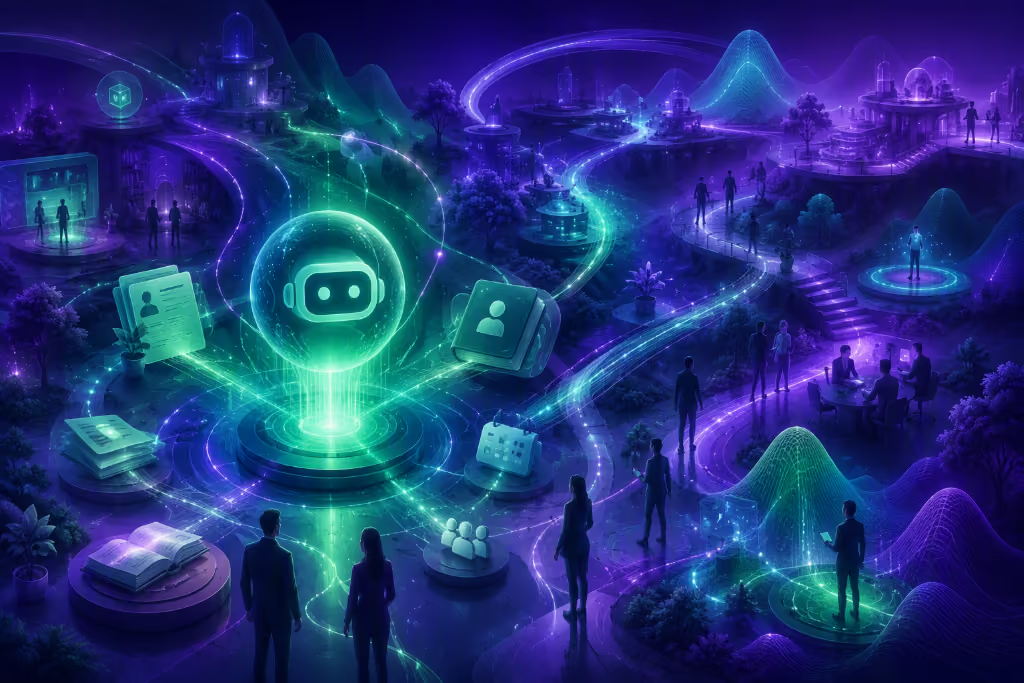
The use of artificial intelligence (AI) and the automation of processes are gaining ground in German companies and in their HR departments. At present only a few companies use AI in HR, but many have plans to introduce AI-based instruments. In the third quarter of 2023 the Leibniz Institute for Economic Research ifo carried out a Randstad ifo survey of HR directors on the use of AI in HR departments. The results showed that at that point only 5% of the companies surveyed were using AI in HR, but a quarter of them were planning to. AI-based chatbots are among the emerging technologies here. As intelligent virtual assistants, these text-based dialogue systems can take a considerable load off HR departments, because they take over time intensive HR tasks such as analysing and shortlisting incoming applications. Chatbots are placed inside the relevant platform, for instance Microsoft Teams or the intranet. They are able to generate and curate content. In that role, chatbots can take over standardised communication processes within the company, such as written exchanges with applicants.
Chatbots in recruitment
A recruiting chatbot, for example, supports the HR department by providing information about open positions and pre-assessing applicants. AI-based chatbots can hold conversations with applicants and use machine learning to keep improving their answers based on their communication with users. That makes a genuine dialogue possible and allows the chatbot to support the application process. For highly individual questions or specific topics, the chatbot can refer people to an appropriate HR expert. Voice-based bots are also able to detect the language automatically and communicate in it.
But chatbots do not only hold conversations in different languages; they also schedule interviews, write job adverts or give feedback, to name just a few examples. In doing so they take over important HR processes and noticeably relieve HR staff of administrative work and routine tasks. Potential candidates receive answers in real time and quick responses, which has a positive effect on the candidate experience and strengthens the company's image as an attractive employer. Once new colleagues have joined, an onboarding chatbot answers their questions.
As intelligent software solutions, chatbots are able to recognise the user's intent and answer questions straight away. They are available to users 24/7 and in many different languages. Whether an application, self service or FAQ chatbot: there are very different chatbots for specific applications and different areas of use. They answer all questions reliably and, through low threshold 24/7 access to all the relevant information in the company's ecosystem, they help to keep compliance guidelines.
They are also taking on increasingly important tasks in employees' individual learning and career paths, making sure that people only learn what is genuinely relevant to their role. Thanks to chatbots, development paths can be made more transparent and more individual.
Possible fields of application for chatbots in HR:
- Recruiting and onboarding: chatbots can provide efficient support across the entire application process, whether in selecting suitable applications, scheduling interviews or answering questions during the onboarding period.
- HR services: holiday requests, travel expense claims, sick notes. Every employee can turn to the chatbot at any time with questions about company procedures and processes and get an immediate answer.
- Development paths: chatbots can take over individual training management, for instance by suggesting suitable seminars or by acting as a learning assistant themselves. A chatbot can also play an active part in reaching career goals, by showing possible career paths within the company or suggesting matching internal vacancies. That helps to tap potential in a targeted way, raise employee satisfaction and strengthen retention.
When it comes to personal matters, however, chatbots are less suitable, because people want to talk to real people about personal concerns.
Do HR chatbots make sense in your own company?
Is a chatbot worth it for your own HR department? To answer that question, THE MAK'ED TEAM looks at the entire HR process landscape as part of the digitalisation strategy: can the enquiries and processes be standardised? How many enquiries come in each day? How large is the effort so far, in other words how long do how many people need to answer them? Are the enquiries made in different languages and how much does that increase the effort? And how efficiently can the questions be answered by a chatbot compared with an HR employee?
If using a chatbot does make sense for the company, we start with smaller use cases. To identify a use case we ask guiding questions covering various aspects, such as how far enquiries and processes can be standardised, who is responsible for managing the chatbot, and what the goals of introducing it are.
THE MAK'ED TEAM accompanies companies through transformation processes in their HR departments. Our HR and digitalisation experts advise on selecting the right AI instruments to match the company's requirements and goals. That is how mid sized companies can continue to meet the challenges of recruitment successfully in future.
You can find further topics such as AI in competence management here.
Source:






.avif)